
If you have a little rabbit, are thinking of getting one, or you’re simply curious about bunny nutrition, this guide will walk you through everything.
The truth is, whenever we imagine a rabbit, we tend to picture them with a carrot in their mouth, but there’s so much more to their diet than that.
Keep reading to discover what they need and what they must avoid to stay healthy and happy, enjoying their fluffy life.
What Do Wild Rabbits Eat?
Rabbits are herbivores, which means they eat only plant-based foods. However, in the wild, not every season offers the same options, so wild rabbits are actually seasonal eaters.
In spring and summer, they enjoy a plethora of choices: grass (plenty of it), clover, herbs, dandelion greens, and flowers. These foods also help keep them hydrated.
When fall arrives, their diet shifts to seasonal flowers, berries, seeds, fallen leaves, and various greens.
During winter, however, food becomes harder to find. To survive, rabbits rely on less tasty options like woody plants – bark, tree buds, and twigs.
Not exactly gourmet, but it gets the job done.
What Do Pet Rabbits Eat? Understanding a Bunny’s Dietary Needs
So, we talked about wild bunnies, but what about your own little fluffy companion? What should they be eating?
For starters, fresh, grass hay is the cornerstone of a domesticated rabbit’s diet. It should always be available and make up the biggest part of their daily meals. Along with hay, leafy green vegetables are an essential addition, while pellets can provide extra nutrients when offered in moderation, but are not essential for every rabbit.
And yes, fruits exist too, but strictly as treats (we’ll get to that next).
How Much Should You feed them?
Now that we know what rabbits should eat, let’s talk about how much.
Hay
So, hay, as the main part of their diet, should account for 80-90% of what a rabbit eats. The best approach is to offer it unlimited, 24 hours a day. Rabbits should eat at least a bundle of hay roughly the size of their own body daily.
If it looks like a lot…good. That’s exactly the point.
Fresh leafy green vegetables
Fresh leafy green vegetables should make up no more than 10-15% of their diet (about 1 cup per kilo of body weight per day). These greens provide vitamins, hydration, and…let’s be honest…pure bunny joy! Try offering at least 3-4 different types of greens daily to ensure a good balance of nutrients (and to keep your bunny from getting bored, because yes, they may be tiny, but they definitely have strong opinions about food).
Pellets
Pellets for rabbits can help cover some nutritional gaps, but they should only play a supporting role, not steal the spotlight. Too many pellets can lead to obesity and digestive issues, like diarrhea. For an average adult rabbit, 15-25 grams of pellets per kilo of body weight each day is enough.
And if the bowl is empty by the end of the day, resist the urge to refill it. That “hunger” is nature’s way of saying “go eat your hay!”
Baby rabbits, due to their growth phase, can be given more pellets, but even then, portions should stay controlled, generally no more than 1/2 cup per day, depending on age and size.
Fruits
Yes, they taste like heaven. And yes, your bunny will look at you like you’ve changed their life forever.
But fruits are high in sugar, so they should only be offered as an occasional treat. One to two tablespoons, 1-2 times per week, is more than enough.
Think of fruit as dessert – not breakfast, lunch, or dinner.
Why is Hay so Essential?
Hay isn’t just important – it’s non-negotiable when it comes to a rabbit’s health.
●By chewing hay, rabbits naturally wear down their continuously growing teeth (which grow around 2 mm per week). This helps prevent painful dental problems such as malocclusion.
●Hay is also vital for the digestive system. It’s rich in long fibers that keep everything moving properly and help prevent a dangerous health issue called gastrointestinal stasis, which can risk their lives.
In short: no hay, no happy bunny.
Best types of hay
Which Hay Should You Choose?
So, you’re searching for the best hay for your bunny? Here are some of the best grass hay options.
Timothy Hay: One of the most popular options, and often recommended by vets. Rabbits usually love it. It’s high in fiber, and its protein and calcium levels are well balanced for adult bunnies.
Every brand can be different, though. So, if your bunny didn’t like one Timothy hay, it doesn’t mean they won’t enjoy another.
Orchard Grass Hay: It’s slightly sweeter and softer than Timothy hay. It’s also a great option for humans with allergies, as it tends to be less dusty.
Many owners choose to mix Orchard Grass and Timothy Hay to make meals more appealing for picky eaters.
Oat Hay: Crunchier in texture and often very appealing to rabbits. It’s great as part of a mix but shouldn’t fully replace grass hays.
Other options:
Meadow hay, botanical hay, Polyphyte hay, Wheat hay, Barley hay, and more.
What About Alfalfa?
Alfalfa hay is suitable for baby rabbits under 6 months, as it contains higher levels of calcium, protein, and fat – nutrients they need during growth.
However, this rich composition makes alfalfa unsuitable for adult rabbits, unless specifically recommended by a vet. Pregnant or nursing rabbits, for example, may benefit from it.
For healthy adult rabbits, too much alfalfa can lead to obesity and urinary problems, such as bladder stones (urolithiasis).
It is recommended to transition young rabbits to grass-based hay slowly, after 4-7 months of life. This helps prepare their digestive system for leafy vegetables, since alfalfa is technically a legume, not a grass. Your vet can help you choose the best transition plan.
Final Hay Thoughts
From a nutritional standpoint, the differences between most grass hays are relatively small. What matters most is finding the hay your bunny loves. The more hay they eat, the healthier they are. If a rabbit refuses hay because they dislike the taste or texture, they’ll miss out on essential fiber, and that’s when problems begin.
So feel free to experiment, mix varieties, and let your bunny decide. 😄
What Vegetables Can a Rabbit Eat – and How Often?
So, first of all, bunnies can enjoy a wide variety of vegetables daily. However, it’s important to offer them in rotation, so they benefit from a broad range of nutrients and to avoid the buildup of potentially harmful compounds, such as oxalates.
To make things easier, I’ve prepared a table with the most common vegetables and how often they can be offered:
| Every day | 3-4 times per week | 2–3 times per week | Occasional treats (1-2 times per week) | Why & Cautions |
| – | – | Celery | – | Low in calories and high in water content. Cut into small pieces to reduce the risk of choking on strings. |
| – | – | Carrot (leaves) | – | High in fiber and nutrients. Much healthier than the carrot root.Offer in moderation due to calcium content. |
| – | – | – | Carrot (root) | High in natural sugars, so it should only be offered as an occasional treat. |
| – | – | – | Asparagus | Rich in vitamins and fiber, but difficult for rabbits to digest. Best offered occasionally. |
| – | Bok choy | – | – | Low in oxalates*, and rich in vitamins A and C. |
| – | Zucchini | – | – | Low in calories and high in water content. |
| – | – | – | Rocket (arugula) | High in calcium, so it should be fed in moderation. |
| – | Cucumber | – | – | Very hydrating and low in calories, but also low in fiber. Should not replace leafy greens. |
| – | Bell pepper | – | – | Excellent source of vitamin C. Always remove seeds and white pith before feeding. |
| – | – | – | Green beans | Low in calories and rich in fiber. Safe when fed in moderate amounts. |
| Romaine lettuce | – | – | – | Nutrient-rich and safe for daily feeding. Avoid iceberg lettuce. |
| – | – | – | Silverbeet (Swiss chard) | Contains oxalates, so it should be offered occasionally. |
| – | – | – | Spinach | High in oxalates. Feed small portions no more than once a week. |
| – | – | – | Kale | Rich in vitamins A, C, and K, but also high in oxalates. Best fed in moderation. |
| – | – | – | Cabbage | Rich in fiber and vitamins C and K, but may cause gas and bloating if overfed. |
| – | – | – | Brussels sprouts | High in fiber and nutrients, but can cause gas. Offer in small quantities. |
| – | – | – | Broccoli (florets and leaves) | Very nutritious and high in fiber, but may cause gas. Introduce slowly and offer in small amounts. |
| – | – | – | Pumpkin | High in natural sugars. Offer small pieces no more than once a week. |
| – | – | – | Beetroot (root) | High in sugar and should be given only as an occasional treat. |
| – | – | Beetroot (leaves) | – | More nutritious than the root, but should still be fed in moderation. |
* High intake of oxalates can contribute to kidney stone formation. That’s why it’s best to rotate oxalate-rich foods with other options, rather than offering them too often.
Can Rabbits Eat Herbs?
Herbs are on the menu too, and many bunnies absolutely love them. While they offer great nutritional benefits, not all herbs are safe, so moderation and selection are key.
| Every day | 3-4 times per week | 2–3 times per week | Occasional treats (1-2 times per week) | Why & Cautions |
| – | Coriander | – | – | Rich in vitamins and antioxidants. Generally well tolerated by most rabbits. |
| – | – | Parsley | – | High in vitamins A and C, but also rich in calcium. Offer in moderation. |
| – | – | Mint | – | May support digestion.Strong aroma may not be suitable for all rabbits. |
| – | – | – | Rosemary | Very strong flavor and aroma. Best offered occasionally and in small amounts. |
| – | – | Basil | – | Aromatic and nutritious, but best given in small amounts. Offer 1-2 leaves to small rabbits. |
Not all rabbits tolerate herbs the same way. Always introduce new herbs slowly and observe your rabbit’s reaction.
Want to learn more about aromatic herbs and rabbits? You can read more here.
Can Rabbits Eat Flowers?
Some flowers are also safe and enjoyable for bunnies, such as dandelions (both flowers and leaves), which are rich in vitamins A, K, and C. Other bunny-friendly flowers include marigolds and nasturtiums.
These should be offered as treats and in small amounts, as dandelion, for example, may cause diarrhea if eaten in large quantities.
Whatever you choose to include in your rabbit’s diet should always be free of chemicals and pesticides and thoroughly washed before serving.
What Fruits Can Rabbits Eat Safely?
Some safe options include: apples and pears, bananas, blackberries, blueberries, melon, watermelon, papaya, peach, pineapple, raspberries, strawberries, grapes (1-2 times per week), and tomatoes (only the flesh – never the greens).
Always get rid of seeds.
Remember: fruits are tasty, but high in sugar, so they should always be treated as an occasional reward, not a daily habit.
How to Choose the Right Pellets for Your Rabbit
You should always research the pellet brand you choose, because not all pellets are made equal.
A good-quality rabbit pellet should contain:
●At least 18-20% fiber. ●Around 14% plant-based protein. ●1-2% fat. ●Less than 1% calcium.
Also, don’t get impressed by colourful pellets – they may look fun for us, but they’re not a good choice for your bunny.
How to Introduce New Foods
Introduce only one new vegetable at a time, in a small amount, and observe your bunny’s stool for the next 24-48 hours. If you notice diarrhea or any signs of an upset stomach, stop offering that food.
If you’re making bigger changes to your rabbit’s diet, always do it gradually over the course of several weeks. Sudden changes can seriously upset their sensitive digestive system.
Foods You Should Avoid Giving Your Rabbit
| Food | Why? |
| Iceberg lettuce | Iceberg lettuce contains lactucarium, a substance that can be toxic to rabbits in larger amounts and may cause diarrhea or lethargy. Additionally, it offers little to no nutritional value. |
| Corn | High in starch and sugar, which can cause serious digestive problems, including gastrointestinal stasis. |
| Leek | Toxic – belongs to the allium family, which is dangerous for rabbits. |
| Mushrooms | Some mushrooms contain toxins and can be life-threatening. Avoid entirely. |
| Bluebells, Foxgloves, Holly & Tulips | Highly poisonous plants for rabbits. |
| Onion & Garlic (Allium family) | Even a small amount can be toxic and may cause digestive distress and blood-related issues. |
| Dried legumes (lentils, chickpeas, dried peas, beans) | Extremely high in starch and difficult to digest when dried, increasing the risk of gas, bloating, and gastrointestinal stasis. |
| Aubergine (eggplant) | Contains solanine, a toxic compound for rabbits, especially in the skin and leaves. Not safe to consume. |
| Rhubarb (leaves included) | Highly toxic and potentially fatal. |
| Potatoes | High in starch and low in nutritional value for rabbits. Can cause digestive issues. |
| Tomato leaves | Contain tomatine and solanine, which are toxic to rabbits. |
| Dairy products | Adult rabbits are lactose intolerant. Dairy can cause digestive upset and obesity. |
| Avocado | Contains persin, which is toxic to rabbits. |
| Fruits in syrup or sugar | Extremely high in sugar, leading to obesity, dental problems, and digestive imbalance. |
| Dried or oily fruits | Concentrated sugars and fats – not suitable for a rabbit’s digestive system. |
| Dry bread | Low nutritional value and can cause intestinal problems. |
| Rodents snacks | Designed for rodents, not rabbits. Often high in sugar, grains, and artificial additives. |
| Chocolate | Contains theobromine, which is toxic and potentially fatal. Also, it’s high in sugar. |
| Seeds & Nuts | High in fat and difficult to digest, which increases the risk of obesity and digestive issues. |
| Muesli-style rabbit foods | These mixes are linked to dental problems, digestive issues, and obesity, as rabbits tend to pick out the tasty bits and ignore the fiber they actually need. |
When in doubt, always assume a food is unsafe and consult a rabbit-savvy veterinatian.
Note: There are, of course, many more fruits, vegetables, flowers, and herbs that rabbits can or cannot eat. It would be impossible to include them all here – this guide simply covers the most common and widely available options.
A note about baby rabbits
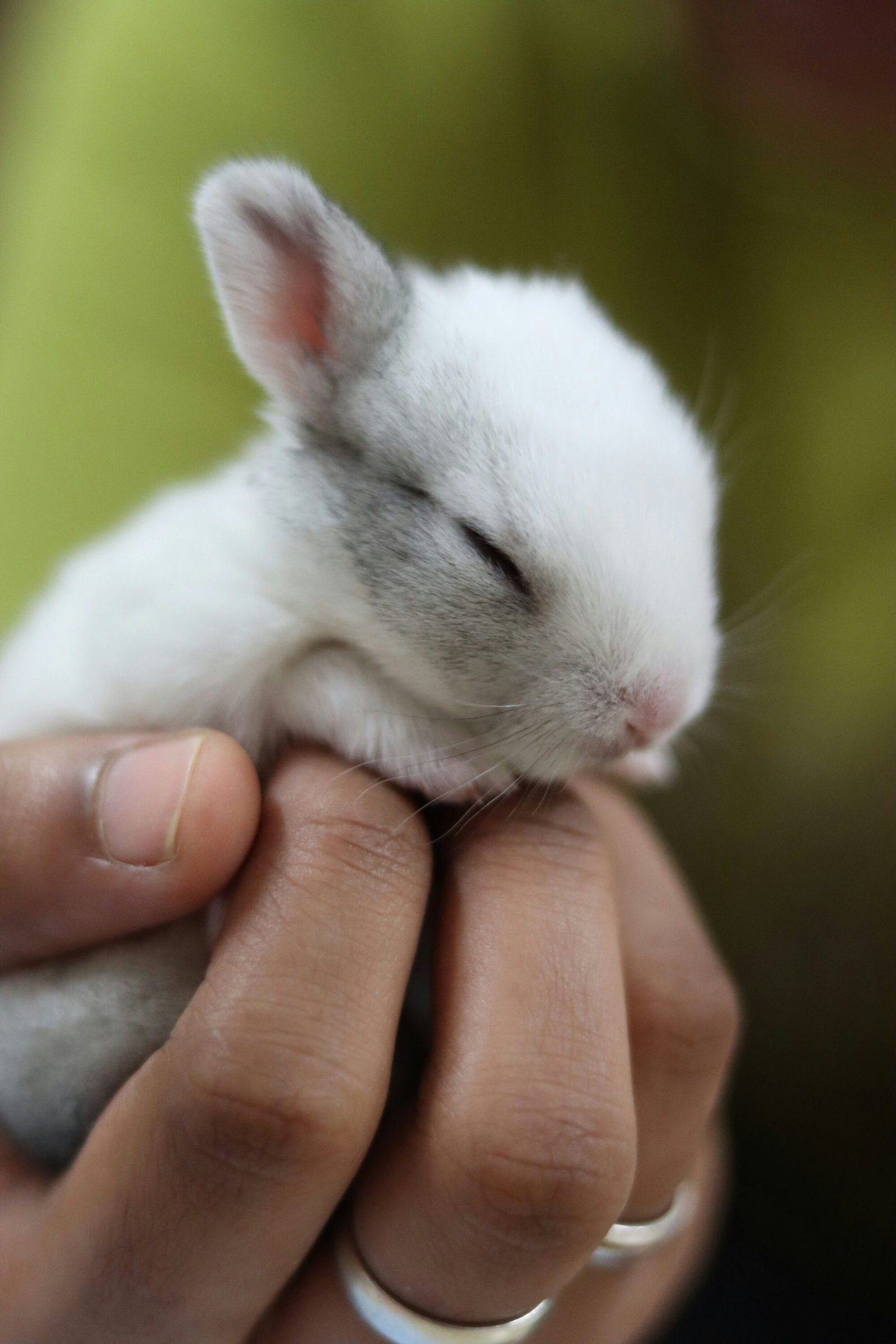
Most of the feeding guidelines in this article apply to adult rabbits. Baby bunnies (under 6 months) have different nutritional needs. Their diet is mainly based on hay and pellets, while fresh vegetables should be introduced slowly and in very small amounts. Always consult a veterinarian before making dietary changes for young rabbits.
What to remember?
Understanding what rabbits eat and in what quantities is key to keeping them healthy, happy, and full of energy. So, to wrap up, let’s keep some things in mind:
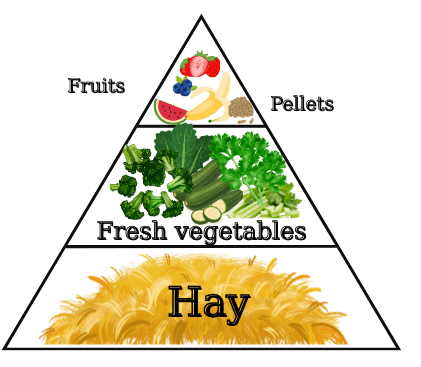
- Hay: 80-90% of our rabbits’ diet.
- Fresh vegetables: 10-15%, with a variety of 3-4 different types per day.
- Fruits: Occasional treats (about 1-2% of the diet), 1-2 tablespoons per day, 1-2 times per week max.
- Pellet: For an average adult rabbit,15-25 grams of pellets per kilo of body weight each day is sufficient.
- Water: Always provide fresh, clean water.
- Muesly cereals, Rodents’ food, etc: Avoid.
- Carrot roots: Should be treated as treats, not a main meal. Too much sugar! Ignore Bugs Bunny.😄
Disclaimer:
This article is for informational purposes only and does not replace professional veterinary advice. Every rabbit is unique, so always consult a qualified, rabbit-savvy veterinarian before making changes to your bunny’s diet.