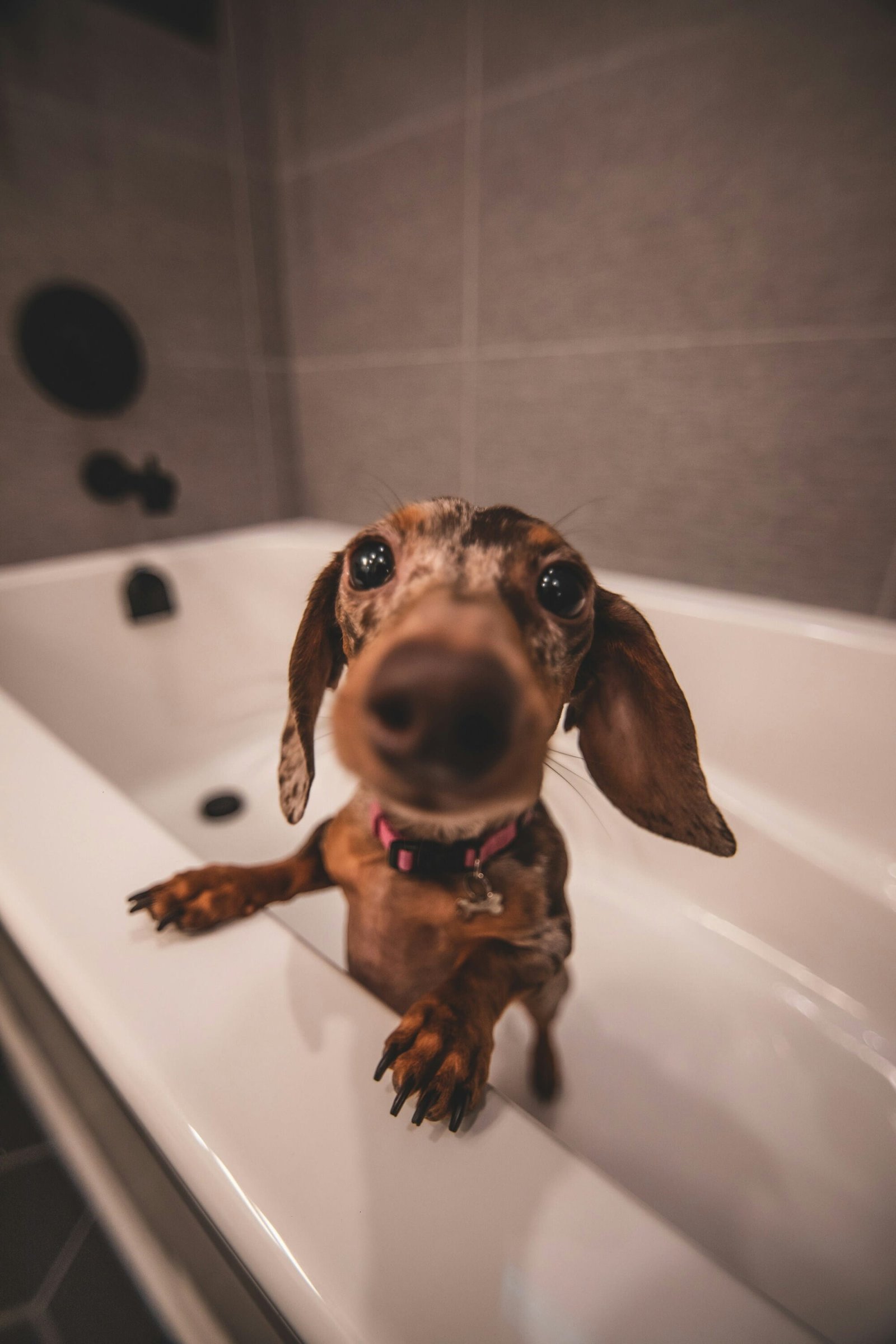
It’s time to wash your puppy, and you’re already feeling stressed. Or maybe you have an adult dog, and bath time always turns into a struggle.
Some dogs run away the moment they hear the water running. Others suddenly forget every command they’ve ever learned, and a few perform Olympic-level acrobatics just to escape the bathtub.
Sometimes, when you finally find the courage to try, you end up wetter than your dog… like you just jumped into a river…with your clothes on.
But here’s the good news: bath time doesn’t have to feel like an impossible challenge. With a little patience, preparation, and the right approach, you can turn it into a calm and even pleasant experience for both you and your furry friend.
Let’s Start With the Basics
The best time to teach a dog to tolerate or even enjoy baths is when they are still a puppy. Puppies are naturally curious and more open to new experiences, so introducing bath time early helps them see it as a normal part of life.
However, if your dog is already an adult, don’t worry. Older dogs can absolutely learn to accept baths with less drama.
An important question many dog owners ask is: How often should you bathe your dog?
You don’t want to bathe them too frequently. Dogs naturally produce oils that protect their skin and coat. Bathing them too often can remove these oils and sometimes cause skin irritation or dryness.
In most cases, bathing your dog about once a month is enough, although this can vary depending on the breed, coat type, and lifestyle.
Of course, there are exceptions.
If your dog decides to jump into a mud puddle, roll in something suspicious at the park, or proudly return from a walk smelling like a mysterious swamp creature… well, then bath time becomes unavoidable.
Preparing the Bathroom
Before you even bring your dog into the bathroom, it’s important to prepare everything you’ll need.

First, always use shampoo specifically made for dogs. Human shampoos are designed for a different skin pH, and they may contain ingredients that can irritate a dog’s skin.
When trying a new shampoo for the first time, apply a small amount first to test for any irritation or allergic reaction.
Another very helpful item is a non-slip mat for your bathtub or shower. A slippery surface can make dogs feel unstable and nervous. A simple rubber mat can make a big difference by helping your dog feel more secure.
Make sure you also have a towel ready nearby before starting the bath. Leaving a wet dog unattended in a bathtub, even for a few seconds, can lead to accidents and chaos.
It’s a good idea to place a small piece of cotton in your dog’s ears. This helps prevent water from entering the ear canal, which can sometimes lead to irritation or ear infections.
Finally, check the water temperature. The water should be warm, not hot and not cold, similar to what you would use for a baby.
If your dog has long hair, there is one more important thing you’ll need: a comb for long coats. Before the bath, use it to gently brush their coat and remove any knots or tangles. Water can tighten existing mats, making them harder and sometimes painful to remove afterward. A quick brushing before the bath can make the whole process much easier.
How to Train Your Dog to Accept Baths
The first step is to train your dog to accept handling.
Start by gently touching them on their chest and back, and gradually lift their paws. You can also touch their nails and ears. When they remain calm and accept your touch peacefully, reward them with their favorite treats for being such a good dog.
Teaching your dog that human hands touching their paws, ears, and body isn’t something scary will also help during future visits to the vet. The vet will definitely appreciate a dog that is comfortable being handled.
The second step is to introduce them to the bath environment.
Call them into the bathroom occasionally and let the water run so they can get used to the sound. Let them see and smell the things you’ll use, such as the towel, the shampoo bottle, and the hose.
Let them stand in the bathtub or shower without washing them at first, and give them treats.
This helps them understand that the bathroom is not a scary place and that good things happen there – treats, attention, and affection.
The third step is finally introducing them to the water.
Again, always reward good behavior with treats and speak in a calm, friendly voice.
Try to avoid high water pressure because it might scare them.
Go slowly. Start by rinsing their paws and gradually move upward.
When rinsing your dog, try to avoid the eyes, ears, and nose. Water or shampoo in these sensitive areas can cause discomfort. Instead, focus on washing the body, neck, legs, and tail first.
If you need to clean your dog’s face, it’s usually safer to use a damp cloth instead of pouring water directly over their head.
Finally, make sure you rinse the coat thoroughly. Leftover shampoo can irritate the skin and cause itching later.
If they stay calm, use your happiest voice and remind them what a great dog they are – followed, of course, by a tasty treat.
A helpful trick is to take your dog for a long walk before bath time so they are a little tired and have less energy to protest.
Most importantly, equip yourself with patience and understanding. Your dog doesn’t automatically know that bath time can be a positive experience… It’s your job to show them.
If you see that it’s just not their day and they’re too upset, let them relax and try again later.
Except, of course, if they rolled in something truly horrible during your walk and a bath is absolutely necessary.
In that case… my friend, good luck!
A Few Extra Grooming Tips
Bathing is only one part of keeping your dog clean and healthy. There are a few other grooming habits that are just as important.
For example, dental care is something many dog owners forget. Regular tooth brushing helps prevent plaque buildup, bad breath, and dental problems.
Nail trimming is also essential because overly long nails can make walking uncomfortable for your dog. Both of these topics deserve a more detailed guide, so we will talk about them in a separate article.
Another helpful habit after your daily walks is cleaning your dog’s paws. Instead of washing them with water every time, many owners prefer using special dog cleaning wipes or dry shampoo products designed for pets. Frequent washing can sometimes irritate the skin or remove the natural oils that protect it, so gentle alternatives can be a better option for daily cleaning.
Final Thoughts
Bath time does not have to be a stressful experience. With patience, consistency, and positive reinforcement, you can help your dog feel safe and comfortable during the process. Remember that every dog learns at their own pace.
Going to a groomer is also a great option if you prefer not to bathe your dog yourself. In my opinion, bath time is not only about cleaning their fur, but also about spending quality time together and strengthening your bond.
With love, patience, and consistency, bath time can become a positive and meaningful routine.