Vet trips can be really stressful- for you, your puppy, and of course, your veterinarian. A dog that isn’t comfortable with handling or has already decided the vet is their sworn enemy can turn a simple check-up into a full-blown drama episode. But with a little preparation, you can turn those stressful moments into stress-free vet visits for everyone involved.
Here are some simple (and actually fun) things you can teach your puppy to make vet visits smoother – and maybe even enjoyable.
Help Your Puppy Feel Calm on the Way to the Vet🐕
It might sound a little funny, but if I could count how many times I struggled to convince my dog to walk down that specific road where the vet was located… I’d probably need both hands and a notebook. She would suddenly stop, look at me, and, as a very stubborn dog, try to convince me that the other road was clearly more interesting.
Luckily for me, she was tiny, and I could just pick her up and continue. But not all dogs are small, and more importantly, it doesn’t have to be stressful for them in the first place.
So yes, take some treats and casually walk in that direction. You don’t always have to go in for an appointment. Just pass by, or stop in to say hi. If your vet sells treats, even better – go in, buy some together, and reward your puppy.
You can even sit for a bit in the waiting room, reward calm behavior, talk to the staff, give a few more treats, and then simply leave. No scary experience, just a normal outing.
Handling Your Dog (Without the Drama) ✋
Making vet visits stress-free starts at home. Teaching your puppy that being touched is not the end of the world is crucial.
Start slowly:
- Touch paws, ears, tail, and mouth
- Reward immediately
- Keep sessions short and positive
Then build up:
- Lift paws
- Gently open their mouth
- Hold positions for a few seconds
- Reward
If your puppy starts getting stressed, pause and try again later. The goal is simple:
“Stay calm = get snacks.”
Bonus:
Nail trimming becomes way easier. Your future self will thank you.
“Lay Down and Stay”
Teaching your puppy to lie down calmly and stay still is incredibly useful.
At the vet, this can help with:
- Exams
- X-rays
- Ultrasounds
- General handling
Add a “stay” command and gradually increase duration. Think of it as teaching your puppy to be a polite little potato.
Stepping Onto Weird Things
You probably don’t have an examination table at home…
Still, you can prepare your puppy by teaching them not to be afraid of stepping onto different surfaces. Use a simple cue word and practice with things like chairs, low tables, rocks, or benches. Reward them every time they step up confidently.
This way, when they encounter the vet’s table, it won’t feel like such a strange and scary experience.
Just remember to use the same cue word.
“Strange Objects Are Not Evil”
At the vet, your puppy will meet weird objects -cold stethoscopes, shiny tools, mysterious things.
You can prepare them:
- Use your phone or another object
- Let them sniff it
- Gently touch their body with it
- Reward calm behavior
Repeat until your puppy reacts like, “Oh, this again? Fine.”
Crate Training (Your Secret Superpower)
At some point, your pet might need to stay at the clinic for a treatment or observation. Teaching them that being in a crate is normal and not stressful is extremely important.
Make the crate a positive space at home, so they don’t feel like they’ve been placed in “dog jail.” It will also make travel much easier if you use a carrier.
So, to make a crate a happy place at home:
- Add soft bedding
- Give treats inside
- Keep it positive
No “drama queen opera performances” required.
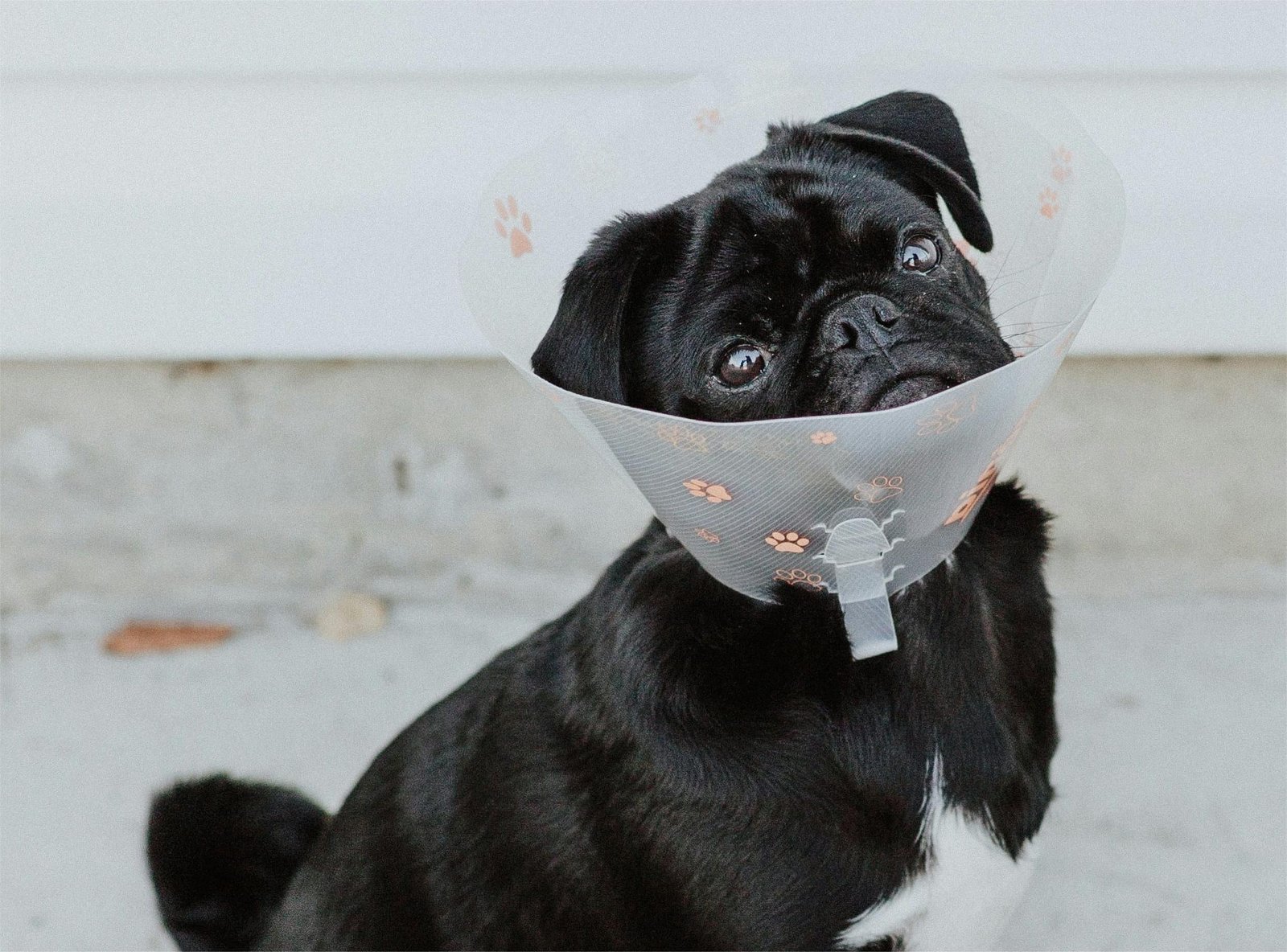
The Cone of Shame
After certain procedures, your dog may need to wear a cone – and if they’ve never experienced it before, expect confusion, drama, and possibly a full performance.
Your dog will act like their life is over.
Aaand it’s a bit more challenging to train, but it can save you a lot of trouble in the future.
You can prepare them:
- Make a soft DIY cone (paper or cardboard)
- Let them wear it for a few seconds
- Reward calm behavior
- Gradually increase time
Muzzle Training (Don’t Skip This!)
I know…it sounds funny to imagine your sweet puppy wearing a muzzle. But the truth is, even the gentlest dog can react unpredictably when in pain or fear.
In situations where your vet needs to act quickly, there may not be time to slowly introduce something new. That’s why it’s helpful if your puppy is already familiar with wearing a muzzle and doesn’t panic.
Introduce it early:
- Let them sniff it
- Reward curiosity
- Slowly build up to wearing it
Extra Tip (Highly Recommended!) ⭐
Practice short “fake vet visits” at home:
- Gently examine your puppy
- Look at teeth
- Touch belly
- Reward everything
Make it a game, not a test.
Final Thought
Some of these might seem a little unnecessary at first, but they really aren’t.
If your puppy starts to associate the vet with negative experiences, that fear can grow and become very difficult to manage over time. Prevention is always easier than fixing a problem later.
With a bit of patience, treats, and consistency, you can help your dog feel safe and create stress-free vet visits.
I hope that helped. Thank you a lot for reading.😊
You might also like: How to Bathe Your Dog Without Stress