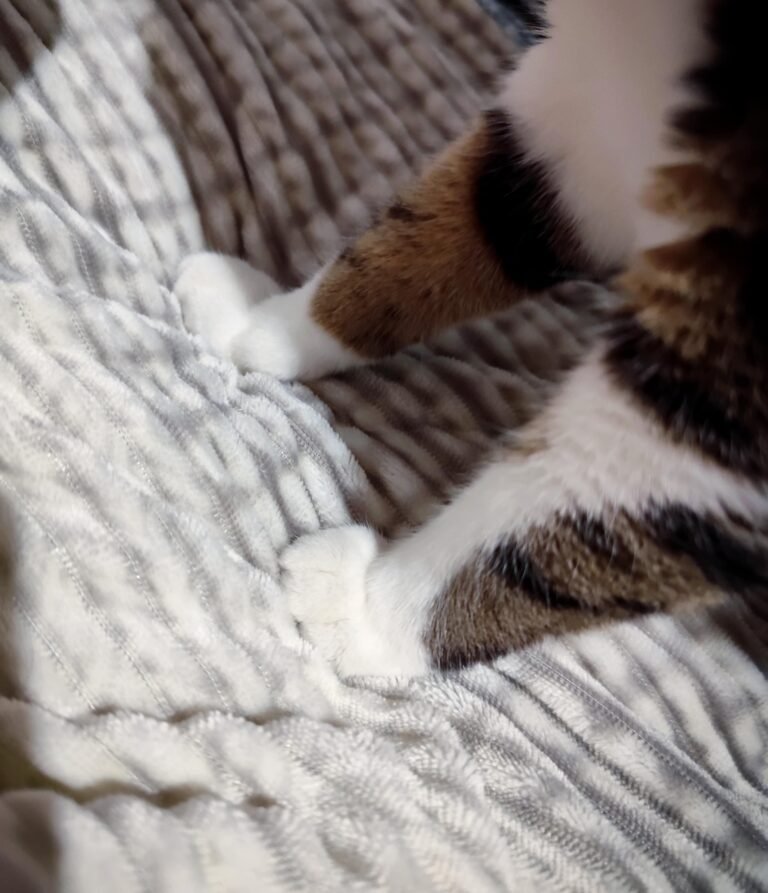
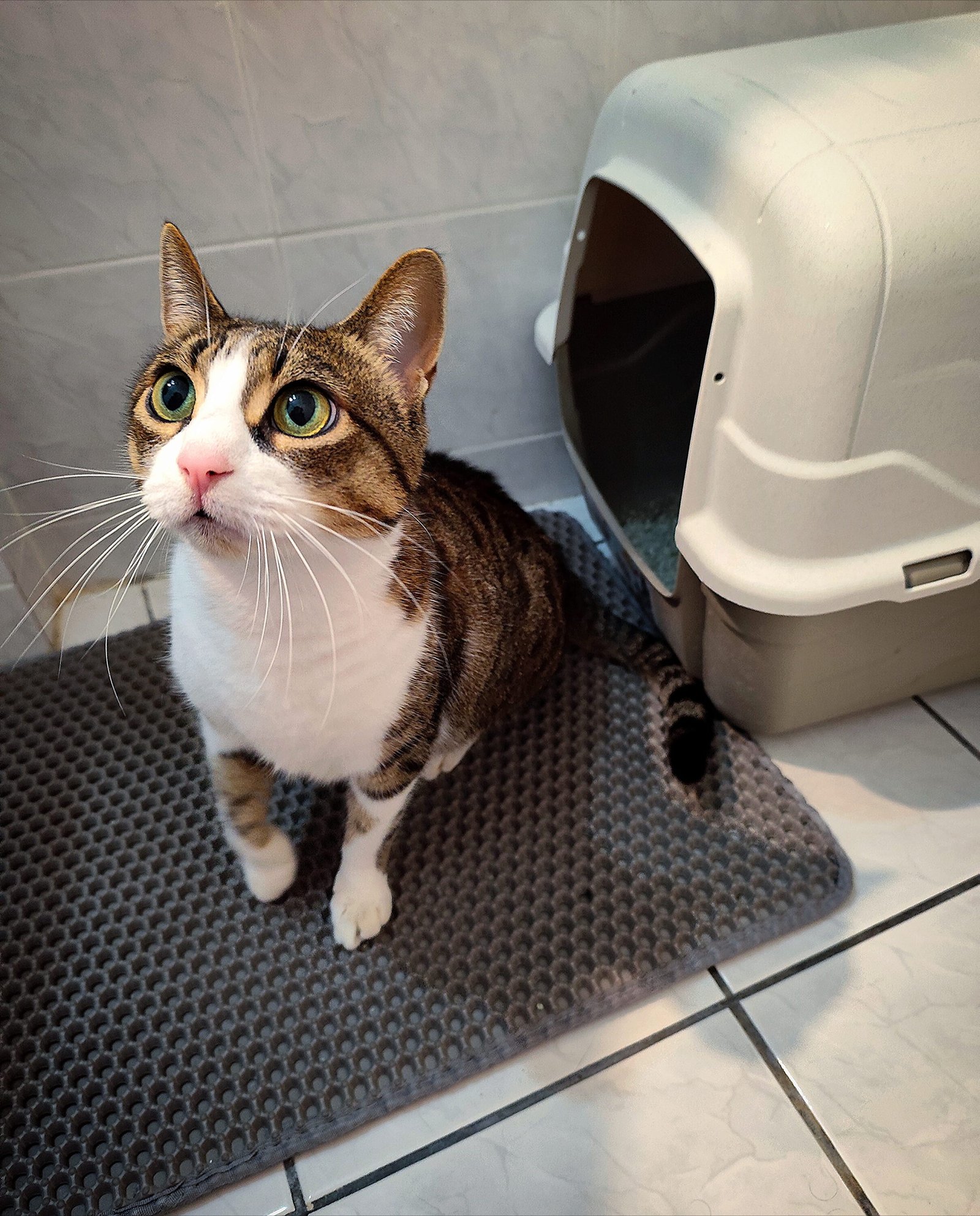
If I were to count the times I’ve found cat litter in strange places around my house… well, I would have lost count by now. Outside the bathroom, on my couch, in my bed, in my socks, even in my dreams!
If you have a cat, you know the feeling. You’re here, after all.
That moment when you’re wearing your shoes and suddenly something feels off under your foot. Something crunchy and annoying. You assume it’s a small rock inside your shoe – only to realize it’s inside your sock.
And it’s not a rock. It’s your cat’s litter!
If, while reading this, you pictured yourself – probably slightly angry – don’t worry, my friend. I got you.
This is what cat litter tracking looks like in real life – finding cat litter everywhere, even in places it has absolutely no business being.
So, yes, we absolutely adore our cats, and nothing can ever change that. But if we can make life together a little easier, why not?
Reality Check: Can You Completely Stop Cat Litter Tracking?
Before we jump into solutions, let’s state the obvious: cat litter tracking can’t be eliminated completely.
If we have a cat, we need to be realistic about two things: the fur on our clothes and the litter in our house.
I’m sorry, but in my opinion, if someone swears they’ve found a magical, 100% effective solution, they are lying.
However, you can absolutely reduce the problem by 90-95% if you’re willing to take…a few measures and build a slightly deeper emotional bond with your broom.
And trust me, 90-95% is perfect! You won’t even notice it anymore, and that’s the whole point!
Why Do I Keep Finding Cat Litter Everywhere?
First, let’s try to understand why this keeps happening, even if your litter brand swears it won’t.
1. Cat Paws Are Basically Litter Traps
Cat paws are soft, flexible, and have little spaces between the pads. Litter gets stuck there very easily – especially lightweight ones.
Once it’s in there, it travels everywhere.
2. Excavator Personality
Some cats handle litter with elegance, quietly and politely.
And others dig like they’ve got insider information on a massive oil deposit and a buyer waiting. Ooor…like the litter clearly belongs on the floor and someone made a terrible mistake putting it in the box.
Now combine that with:
- a low-sided litter box
- or a long-haired cat
…and…oh god!
In my case, I’m pretty sure it depends on my cat’s mood, and you cannot convince me otherwise. If she’s annoyed about something? Well, welcome to the beach.
3. Long Hair + Paws = A Litter Storage System
Long-haired cats usually have longer fur between their toes. That fur traps litter, holds onto it lovingly, and then releases it all over your house.
4. And Yes, Of Course the Litter You Choose Matters
It matters, but not on its own.
Choosing a good, dust-free litter won’t magically erase all your problems, but it can definitely help reduce them.
Which brings us to the real question…
How Do I Stop This?
Reducing cat litter tracking isn’t about one magic solution – it’s about small changes that actually work together.
1. Choose the Right Litter (Easier Said Than Done)
The litter you choose plays a huge role in tracking.
Honestly? I’m still testing brands myself, trying to figure out which one works best for my cat. I’ve tried many cheap and expensive options, and some of the second ones were…well, underwhelming, considering how much litter I was still finding around the house.
However, I’ve learned this: you can’t really have everything in one litter.
In general, litters with larger, smoother particles tend to track less than those with smaller, harder, sand-like particles.
What is absolutely essential is choosing a low-dust or dust-free option because inhaling dust and other airborne irritants can harm both you and your cat’s respiratory system.
Try to avoid:
- sand-like textures
- very lightweight litter
- Clay
- Silica, which is found in silica gel litters (it can become airborne)
After doing some research, I found that healthier options include plant-based litter made from wood or pine, corn, tofu/soybeans, paper, or grass. These litters are often lower in dust than traditional clay options and are natural and biodegradable, making them better for your cat’s health and the environment.

My next experiment will definitely be pellets. I might even write a whole article about it.
Image by Ernesto Rodriguez from Pixabay
So, do your research as well, because choosing a litter isn’t as simple or harmless as we might think.
That said…no matter what we say, your cat gets the final vote.
If they don’t like the smell or the texture of a litter, I’m sorry, but they might decide your carpet is a better option.
So, yes… if you notice they don’t like it, change it.
You have to find the one.
2. Buy the right Litter box
Choosing the right litter box can already help reduce cat litter tracking. But what does“the right box” actually mean?
•The right size: A box that gives your cat plenty of room to dig and throw litter inside the box, not outside of it.
•A closed box: In my honest opinion, closed litter boxes are much better at reducing litter tracking around the house. Whatever your cat digs stays inside the box, and the only litter that escapes is the small amount trapped in their fur and paws.
A box with a door is even better, but not all cats can tolerate it. Mine certainly didn’t, so I had to remove the door.
•A box with taller walls: If, for whatever reason, you can’t use a closed box, consider one with higher sides. It helps keep “flying litter” contained. Just keep in mind that this option might not work well for senior cats or cats with mobility issues.
3. A Good Litter Tracking Mat
Believe me, this is life-saving!
And no, I don’t mean just any small, flat mat or a random towel you might have at home.
I’ve tried that. It didn’t work.
I mean real litter-trapping mats, like those:
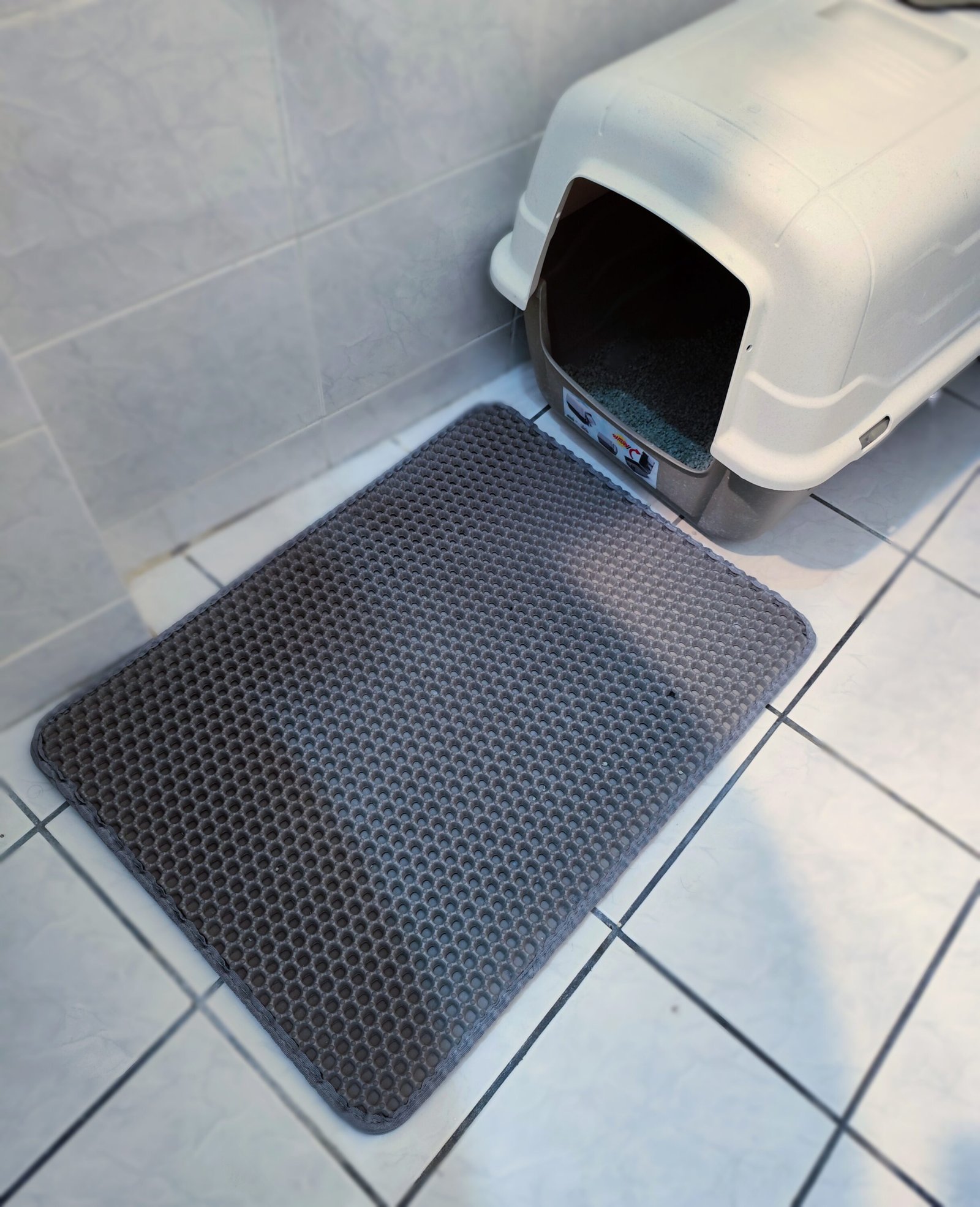
These actually work because they have two layers: one on top and one underneath. The bottom layer creates space where the litter falls and stays trapped instead of spreading into the house.
Then you can simply pour it back into the litter box or throw it in the trash.
They come in many sizes, they’re easy to clean, and they usually don’t cost much.
➡Place the mat directly outside the litter box.
Oh! And don’t forget to wash it regularly, too!
4. Clean the Litter Box Regularly
For me, scooping once a day (sometimes twice, max) and doing a full litter change once a week works wonders.
When you remove wet litter – which can be sticky (and let’s be honest, gross) – you reduce the chances of litter sticking to your cat’s fur and paws.
And trust me when I say this: no cat likes stepping on poop and urine. They are proud animals, after all.
Plus, when the litter box is clean, your cat won’t keep going in and out ten times before finally deciding to do their business – or dig excessively.
❄ An automatic litter box is a good idea if you don’t have a lot of free time.
Fun fact: my cat, Kleopatra, is an actual diva. She uses her “bathroom” exactly twice. Then she starts screaming at me!
And honestly? I can’t blame her. If touching those…things disgusts us, why shouldn’t it disgust them too?
5. Trim Their Paw Fur
Cats with medium or long fur are much more likely to trap litter in their fluffy paws. So, if you carefully trim the fur around their paws, you can significantly reduce the problem.
You’ll definitely need proper grooming shears for this.
6. Buy a Robot Vacuum Cleaner
I completely understand that not everyone can get one. I haven’t, but I have heard that it can help a lot. A robot vacuum won’t just pick up the litter, but it will also take care of the fur around your house.
7. One Last Tip
Here’s something my aunt taught me, and surprisingly…it helps. When you’re cleaning the litter box, spread more litter toward the back than the front.
Think about it like this: 60% in the back, 40% in the front.
As cats dig, the litter naturally moves forward. By spreading the litter this way, you increase the chances that it stays in the box instead of ending up all over the floor.
Simple but sometimes effective.
Of course, how well this works also depends on the litter box you use.
Final Thoughts
So, yes – the right litter combined with some of those tips can absolutely reduce cat litter tracking, save your floors and…your sanity.
Arm yourself with patience, start experimenting, and find what works best for you and your kitty.
Good luck and may your floors stay as crunch-free as possible!🐾✨