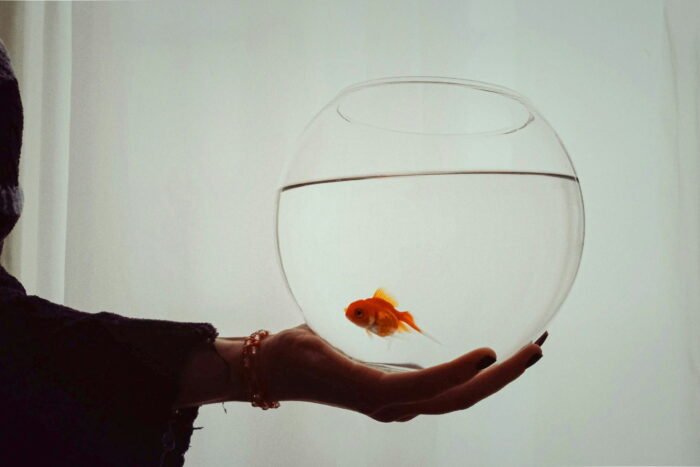
We all have those memories of goldfish in little bowls, which we admired as they tried to swim left and right in the tiny space they had. We believed they were thriving, but the truth is they were barely surviving.
Working in a pet shop, I often meet people who brag about keeping their goldfish alive for a whole year, when in reality, goldfish are meant to live at least 10 to 15 years, some even more than 30! Yes, 30! Not exactly a short-term guest.
It is true that goldfish were, for many, considered small fish with few requirements, but the tricky part is that they can actually grow to 15 to 25 cm, depending on the species.
So, what does a goldfish really need in order to live a happy, healthy life?
1. Space
The most important part of creating their environment is space. When goldfish live in a small bowl, their growth often becomes stunted due to limited space and poor water quality, which leads to serious health problems and a short, stressful life.
Depending on the species and the filtration system, a single goldfish needs about 40 to 50 liters of water minimum. More is always better. Fancy goldfish may grow to 15 – 20 cm, while single-tail varieties like comet or shubunkin can reach 30 cm or more and are often better suited for very large aquariums or ponds. Yes, they truly need room.
2. Filter
Goldfish are considered “dirty fish” because they produce more waste than many other species. That means they need a strong, efficient filter with beneficial bacteria so the nitrogen cycle can function properly.
Without this biological filtration, ammonia from waste and uneaten food builds up in the water and becomes toxic. Ammonia poisoning is one of the main reasons goldfish die prematurely.
3. Cleaning routine
Having a filter does not mean zero work for you. You should change 30-50% of the water every week in a filtered aquarium.
If you don’t have a filter, water changes should be done every 2-3 days.
Always add a dechlorinator to new tap water so it becomes safe for your fish, and make sure the water you add has the same temperature as your aquarium. Otherwise, you might stress your fish.
When cleaning filter media, rinse it only in the water you removed from the aquarium, never under running tap water, so you don’t kill our helpful friends, the bacteria.
Also, if you decide to wash your entire aquarium, you can keep your fish in a bucket with some of the original tank water, clean everything with vinegar and water ( never with soap), and then return everything.
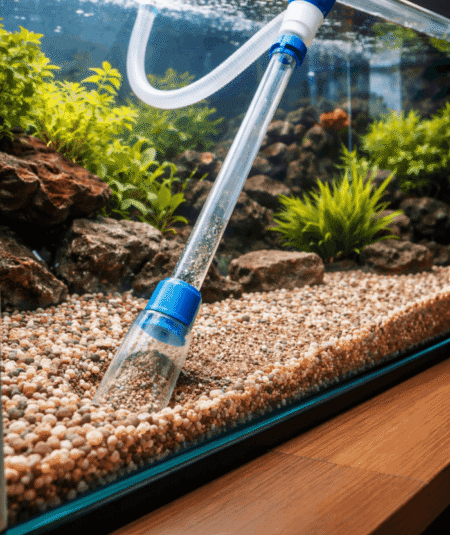
A gravel cleaner or a cleaning kit like this is extremely helpful for removing waste from sand or gravel. Using it weekly makes a big difference in water quality.
4. Feeding
Let’s debunk another myth. Goldfish do not die because their stomach “explodes” from too much food.
So no, your mother did not murder your beloved goldfish while you were on holiday because she gave it more flakes than it could eat.
Buuuuut, she might have accidentally murdered it through environmental sabotage.
You see, excess food that remains uneaten breaks down, releases ammonia, and turns the water toxic. That is what actually harms the fish, not a ” full ” stomach, but a polluted home.
So, feed only what your fish can eat within one to two minutes max. If food is still floating around after that, you’ve officially entered the overfeeding zone.
6. Water parameters
Ideal water pH is around 7 to 8, and moderate to hard water is generally suitable. Goldfish are quite tolerant, but stable parameters matter more than perfect numbers.
Regarding water temperature, room temperature is fine at 18° to 22° C, so depending on your room conditions, you might not even need a heater.
7. Salt
When used carefully, aquarium salt or plain table salt without additives can help your goldfish by reducing parasites, supporting the slime coat, and helping with mild infections and stress.
The best method is to take some water from the aquarium and use it to dissolve the salt in it first. Make sure there are no remaining salt granules, because if a fish swallows them, it can cause internal damage.
The dosage is one tablespoon for every 20 liters of water. If you perform a water change,add salt only for the liters you are replacing.
Also, make sure to do some research if you have live plants, because not all of them can tolerate salt.
5. Decoration
So, we finished our aquarium, but we want to make it more beautiful. Let’s talk about it.
For starters, you should know that goldfish often uproot or eat many plants, so choices are limited. I have personally seen that they usually leave anubias alive, and many aquarists also report success with:
• vallisneria
• echinodoru
• java fern
• cryptocoryne
For substrate, both sand and gravel can work, but goldfish often prefer sand because they like to sift through it. Avoid too many decorations, because swimming space is more important.
Final Thoughts
So, yes, goldfish are not decorations with a pulse.
They have their own needs in order to thrive, or they will give you the dramatic upside-down stare.
And here is a fun fact about these beautiful little creatures that will hopefully give you the right motivation to try harder for their well-being.
Did you know that they can learn to recognize their owner? And no, they will not forget you in three seconds.
Just imagine a 10 year old fish coming to the glass just to see you.